


Capulet’s Orchard: A Theatrical Installation Inspired by Shakespeare
Capulet’s Orchard reinterprets Act 2, Scene 2 of Romeo and Juliet within an iconic stage-like setting, exploring themes of love, conflict, and connection. The installation distills traditional Italian architectural motifs into a folded, sculptural vertical plane that acts as both backdrop and bar, inviting visitors to engage with the piece from every angle. By transforming the classic balcony scene into an interactive object, the design creates a space where the tension and intimacy of Shakespeare’s most famous lovers are reimagined for a contemporary audience.
Capulets Orchard
This concept for our installation takes its cue from one of the most infamous scenes in Shakespeare’s works. Capulet’s Orchard places Act 2, Scene 2 of Romeo and Juliet within one of the most iconic and recognised set formats in cultural history.
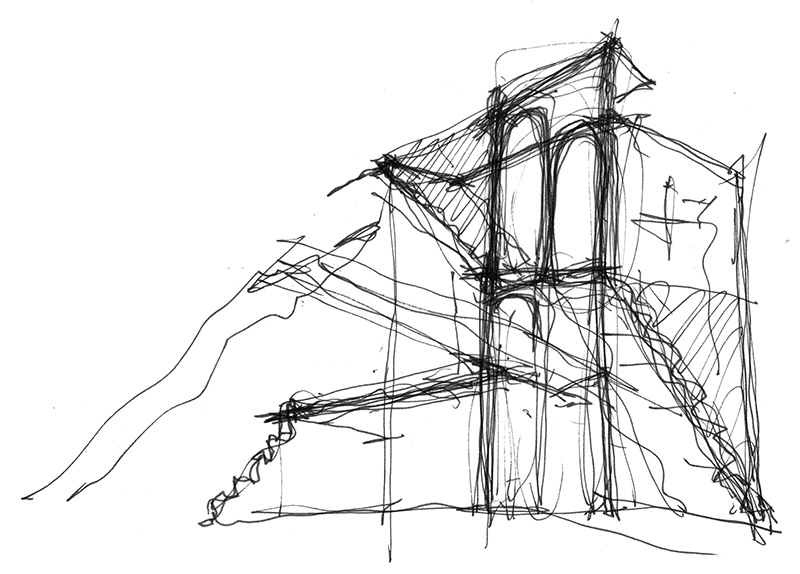
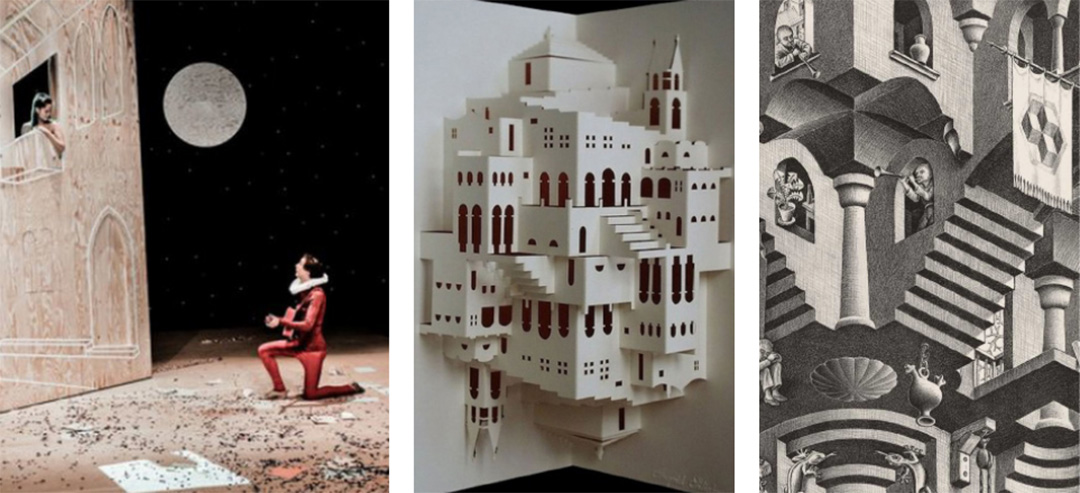
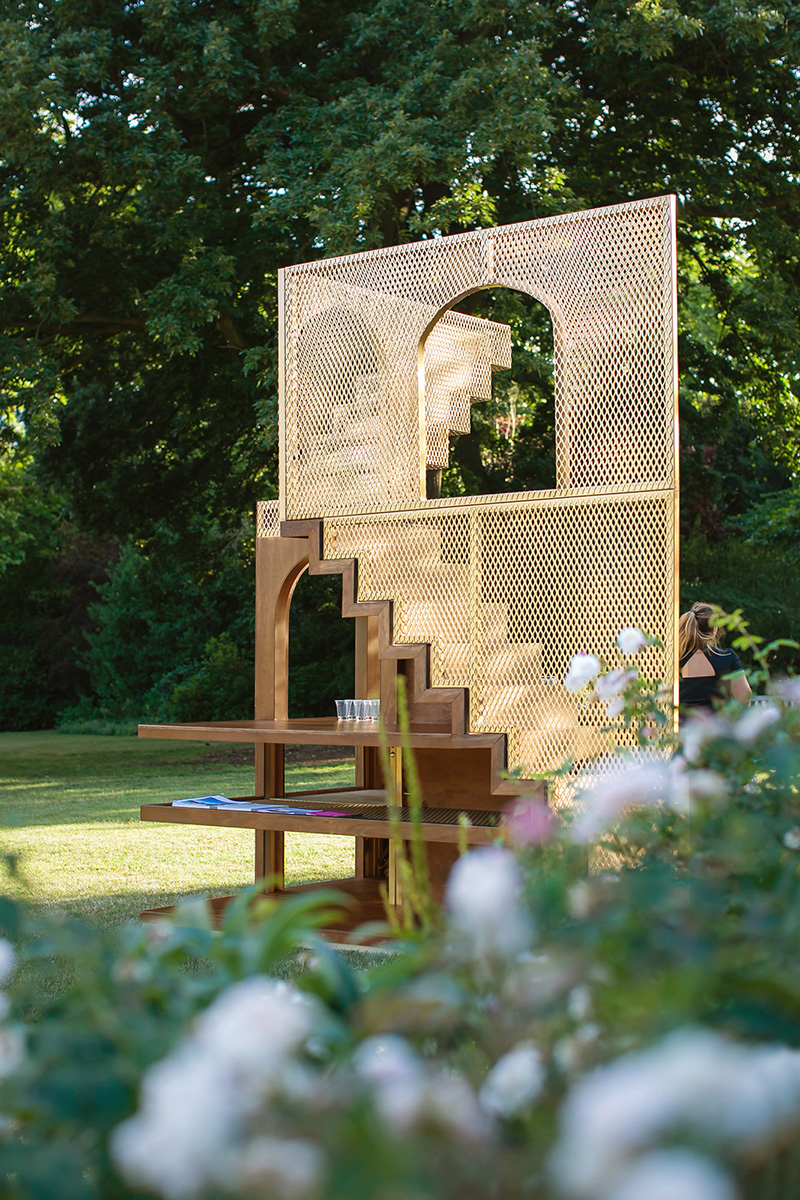
The vernacular forms and motifs of traditional Italian architecture are distilled and simplified and, harnessing elements often explored in theatre, transferred into a psuedo-stage setting. The idea of the traditional 2D theatre backdrop is transformed and distorted to form an interactive object that can be considered in the round, approachable from any angle. Imagined as a singular vertical plane that is folded and twisted, the bar creases to form a sculptural stair.
The simple setup of the scene allows complex themes of familial conflict, love, lust, and basic human emotion play out in a way that is instinctively relatable. The metaphor for the social divide between the Montagues and Capulets physically embodied in the placement of Romeo in the orchard grounds below, and Juliet on the balcony above. The Domus bar draws on the distinct juxtaposition of this divide and the ultimately tragic magnetism between the two lovers that breaches it.
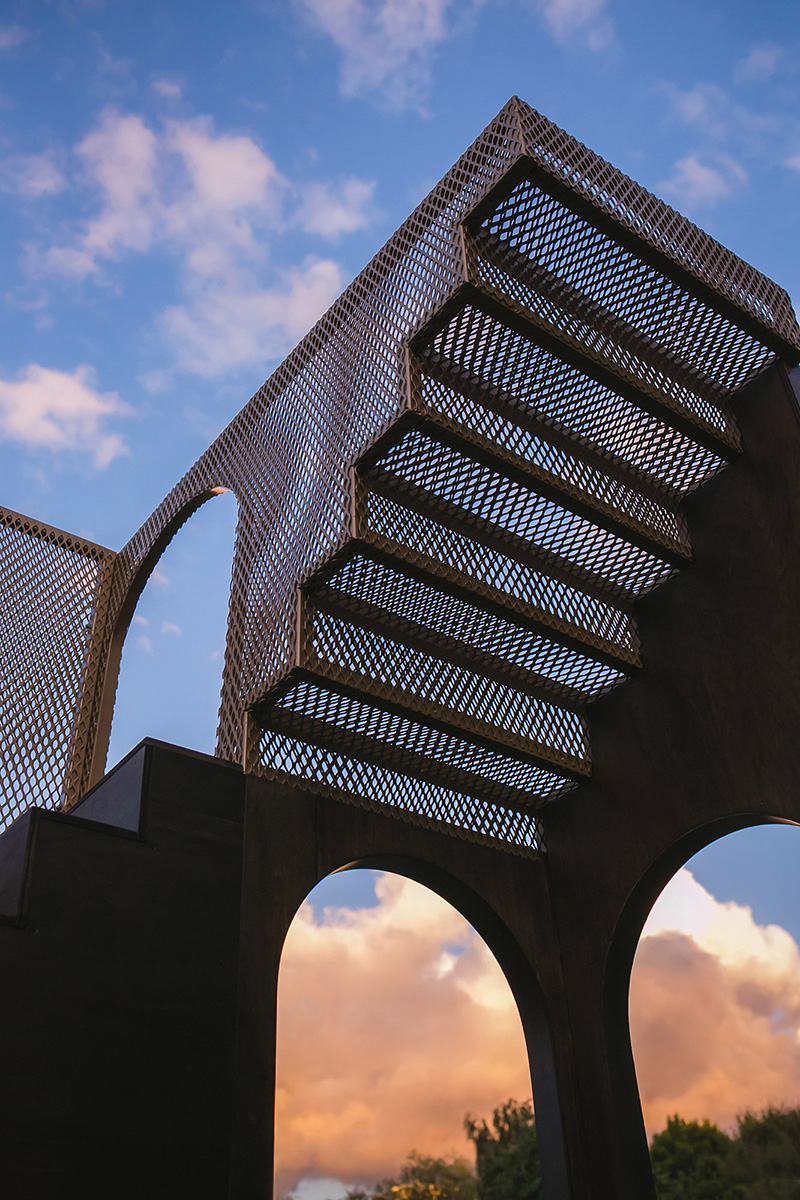
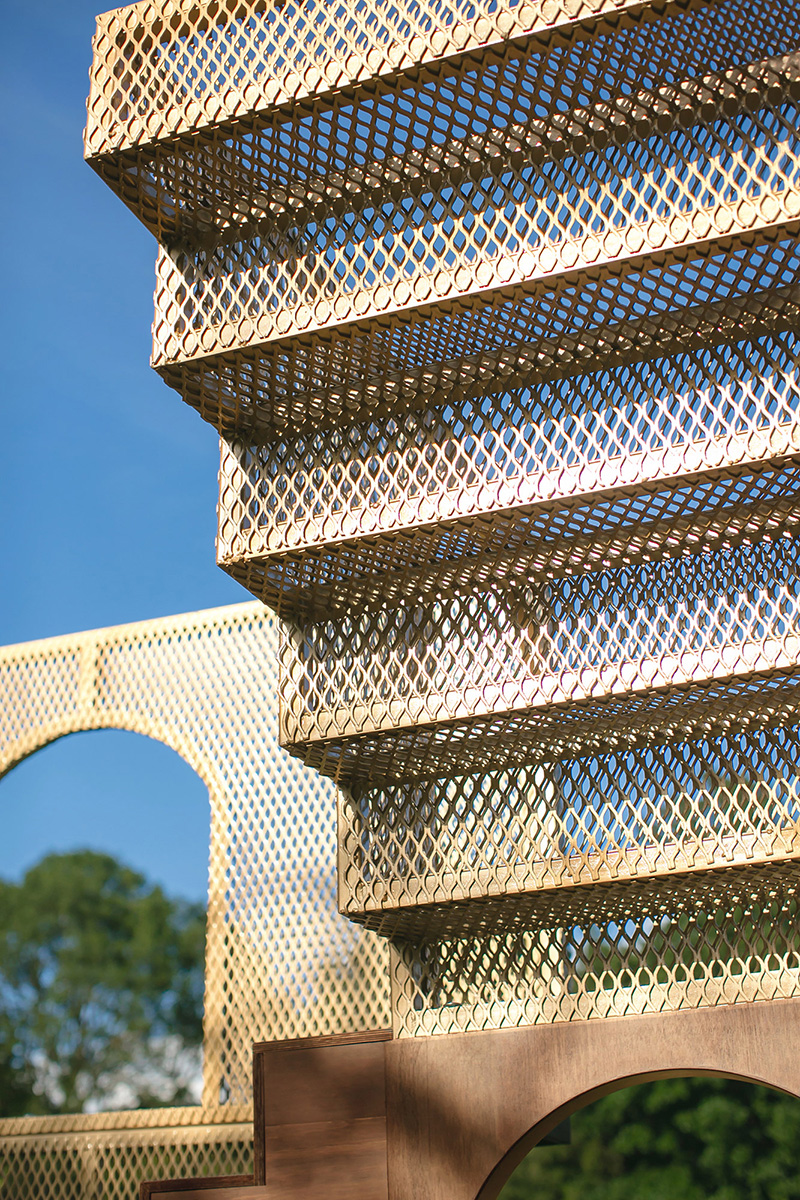
The sharp geometric lines used here form the contrasting edge that wraps in upon itself – highlighted by the change in materiality – which represents the separation of the characters and their ultimate union.
As an element, the bar can be used from both sides, allowing flexibility for configuration in the various squares, whilst drawing on stage sets allows for its simple assembly, dissassembly and transportation from location to location.